


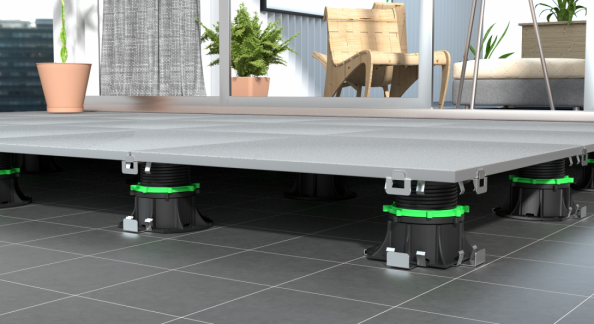
In modern architecture, creating a perfectly level outdoor surface on uneven rooftops or sloped terraces has always been a challenge. Traditionally, heavy bedding sand or permanent concrete structures were used, which added immense weight and complicated drainage.Moonbay Adjustable Pedestals revolutionize this process by providing a versatile, lightweight, and high-strength "dry-installation" solution for raised flooring.
What are Moonbay Pedestals Used For?
Moonbay pedestals are engineered for high-end landscaping and civil engineering projects. They act as the "skeleton" beneath the surface, supporting materials such as:
Stone Pavers & Granite TilesTimber or Composite (WPC) DeckingMetal Gratings & Industrial Platforms
Primary Applications:
1.Roof Gardens & Terraces: Allows for easy drainage and prevents water ponding.
2.Water Features: Conceals pipes and lighting while keeping the surface accessible.
3.Balconies & Podiums: Creates a seamless transition between indoor and outdoor floor levels.
How Do They Work? (The Mechanical Principle)
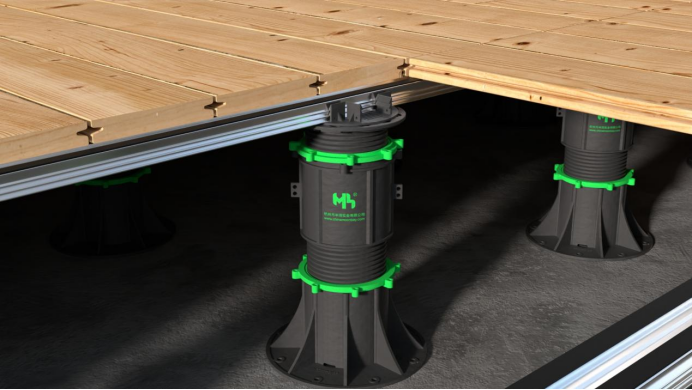
The system operates on a telescopic screw-jack mechanism. By rotating the threaded collar, the height can be adjusted with millimeter precision.
Technical Insight: Unlike fixed supports, Moonbay systems allow for air circulation and concealed service routing (cables/pipes) beneath the tiles, significantly improving the thermal insulation of the building.
Step-by-Step
Installation GuideInstalling a Moonbay system is straightforward and requires no specialized heavy machinery. Follow these five essential steps:
Step 1: Substrate PreparationEnsure the base (concrete slab or waterproof membrane) is clean and structurally sound. Although pedestals can handle slopes, the surface should be free of loose debris.
Step 2: Marking the LayoutAccording to your tile or plank dimensions, mark the grid on the ground. This ensures that every corner of your paving material is supported by a pedestal head.
Step 3: Height AdjustmentPlace the pedestals at the intersection points. Rotate the height ring to reach the desired level. Use a laser level or a spirit level to ensure the tops of all pedestals are perfectly aligned.
Step 4: Installing the Surface MaterialFor Tiles: Place the tile onto the pedestal head. The integrated spacer tabs will automatically create uniform gaps for water drainage.For Decking: Attach a joist cradle to the pedestal head and lay your timber/WPC beams across them.
Step 5: Final CalibrationOnce the floor is laid, perform a final check. If any tile is slightly uneven, use a special adjustment key to fine-tune the height without removing the tile.
Why Choose the Moonbay Solution?
1.Load Bearing: Capable of supporting over 2,000kg per pedestal (varies by model).
2.Durability: Made from UV-resistant and eco-friendly Polypropylene (PP).
3.Maintenance: Since no mortar is used, you can simply lift a tile to access the substrate for repairs at any time.
Ready to elevate your project?
Moonbay provides comprehensive technical support and layout design services for engineering projects worldwide. Contact our operations team at the Hangzhou headquarters for detailed specifications and load-test reports.


Mobile/WhatsApp:+ 86 176 8231 3725
ADD:Room B205, Cross-Border E-Commerce Comprehensive Pilot Area, No. 776 Jianshe 1st Road, Xiaoshan District, Hangzhou Zhejiang, China


Copyright: Hangzhou Moonbay Industrial Co., Ltd. @ 2021 record Technical support: xuanmeng network
 Home
Home

